Most domestic refrigerators do not maintain a single, uniform temperature throughout the cabinet. Cold air originates from evaporator coils, usually positioned behind the freezer compartment or along the rear wall, and circulates via convection currents and small internal fans. Because warm air naturally rises and cold air sinks, distinct thermal microclimates develop inside the appliance. The difference between the coldest pocket near the rear base and the warmest pocket at the top of the door can exceed 8 degrees Fahrenheit (about 4.5 degrees Celsius). Operating under the assumption that every square inch of shelf space provides identical cooling leaves perishable foods vulnerable to spoilage and bacterial proliferation.
The primary objective of refrigerated storage is slowing the reproduction rate of pathogenic micro-organisms, notably Listeria monocytogenes, Salmonella species, and Clostridium botulinum. United States Department of Agriculture guidelines specify that the safe operating ceiling for cold storage is 40 degrees Fahrenheit (4.4 degrees Celsius). However, running a refrigerator right at that boundary introduces risk because door openings and ambient room heat trigger temporary spikes into the danger zone. Understanding the thermal mechanics of each shelf allows you to place groceries systematically, reducing cross-contamination risks and preventing premature food waste.
Thermal Variations Across Refrigerator Compartments
A standard upright refrigerator operates on cyclic heat exchange. When the compressor runs, chilled air is forced into the interior, typically venting into the freezer first before venting into the fresh-food compartment through a baffle or damper. Because cold air is denser than warm air, it settles directly to the lowest levels. As a result, the bottom glass shelf positioned directly above the crisper drawers is almost universally the coldest zone in the appliance, routinely measuring between 33 and 36 degrees Fahrenheit (0.5 to 2.2 degrees Celsius).
In contrast, the top shelf and the upper door bins receive the rising ambient air inside the unit. These areas also experience the slowest recovery times after the door has been opened. In a typical kitchen where ambient temperatures hover around 70 degrees Fahrenheit (21 degrees Celsius), an open door allows warm room air to enter the top of the box while dense cold air spills across the kitchen floor. The door bins, separated from the main cooling ducts and exposed to room temperature during every retrieval, form the warmest zone in the cabinet, frequently idling between 41 and 45 degrees Fahrenheit (5 to 7.2 degrees Celsius).
Crisper drawers introduce a secondary environmental factor: humidity control. Standard storage shelves are subject to the drying effect of evaporator coils, which pull moisture out of the air as frost. Crisper drawers isolate produce from this forced dry airflow. High-humidity settings close the drawer vents, trapping the natural water vapor transpired by leafy greens and brassicas. Low-humidity settings open small slide vents, allowing ethylene gas, an aging hormone emitted by ripening apples, pears, and stone fruits, to escape without accumulating and prematurely rotting neighboring produce.
| Compartment Zone | Typical Temperature Range | Primary Risk Factors | Recommended Inventory |
|---|---|---|---|
| Top Shelves | 37 to 39 degrees F (2.8 to 3.9 degrees C) | Warm air collection, door air displacement | Cooked leftovers, ready-to-eat deli goods, drinks |
| Middle Shelves | 35 to 37 degrees F (1.7 to 2.8 degrees C) | Moderate airflow fluctuation | Dairy, eggs, prepared salads, cured sandwich meats |
| Lowest Shelf | 33 to 35 degrees F (0.5 to 1.7 degrees C) | Deepest cold, potential freeze spots near vents | Raw poultry, beef, pork, and whole fish |
| Door Bins | 40 to 45 degrees F (4.4 to 7.2 degrees C) | Thermal shocks from frequent openings | Mustard, vinegar-based sauces, jams, soda cans |
| Crisper Drawers | 34 to 38 degrees F (1.1 to 3.3 degrees C) | Ethylene buildup, excessive moisture decay | Vegetables (high humidity), select fruits (low humidity) |
Upper Shelves: Cooked Leftovers and Ready Foods
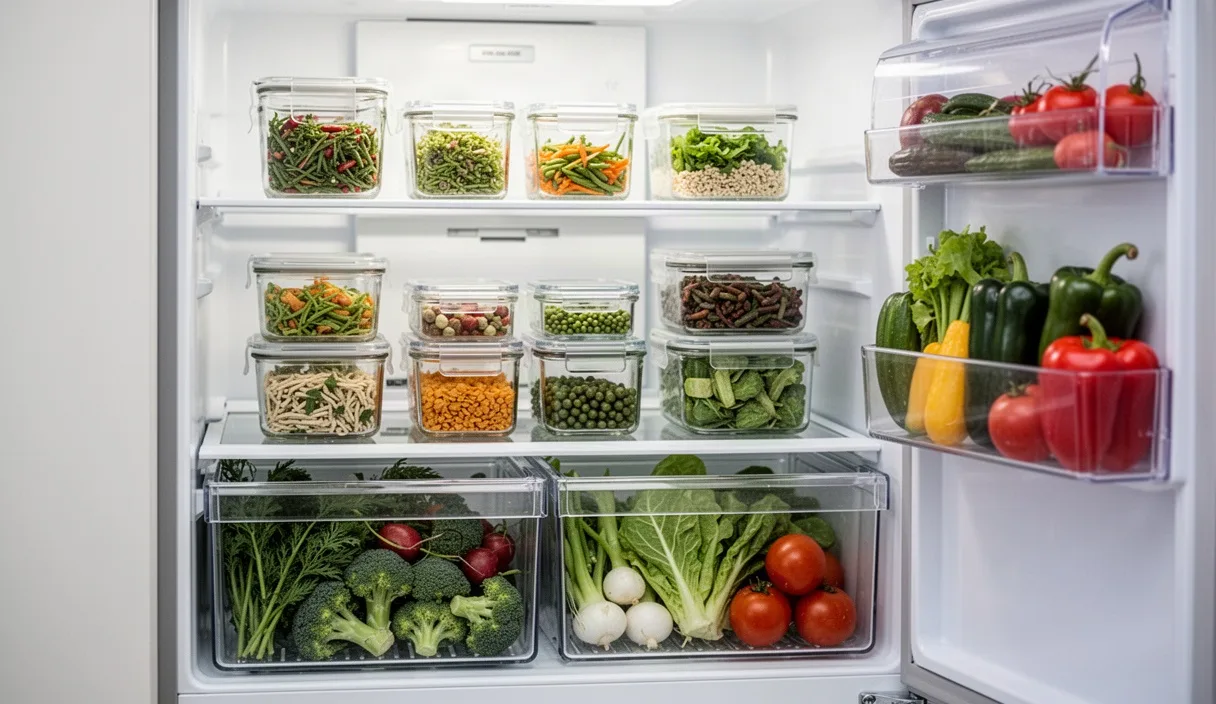
The upper shelves maintain the most consistent, moderate temperatures in the main body of the unit, usually staying between 37 and 39 degrees Fahrenheit. This zone does not suffer the extreme freeze risk found immediately adjacent to the cold air return vents at the bottom, nor does it suffer the rapid thermal swings of the door. This steady thermal environment makes the upper tier ideal for foods that have already undergone pathogen reduction via cooking and will not receive further high-heat treatment before consumption.
Cooked leftovers should be transferred to the upper shelves within two hours of preparation, or within one hour if ambient kitchen temperatures exceed 90 degrees Fahrenheit (32.2 degrees Celsius). Store these meals in shallow, airtight containers made of glass or food-safe plastics no deeper than three inches. Deep containers, such as large soup stockpots, trap core heat; the center of a five-quart stew can take more than twelve hours to drop below 40 degrees Fahrenheit, creating an ideal incubation window for Bacillus cereus and Staphylococcus aureus.
Ready-to-eat foods also belong on these upper surfaces. Examples include:
- Deli meats sliced at the counter, which should be used within three to five days of purchase.
- Commercially prepared spreads, hummus, and dips.
- Soft and hard cheeses wrapped in breathable parchment or specialized cheese paper to balance moisture retention.
- Packaged fresh herbs stored upright in a jar containing one inch of water, loosely covered with a plastic produce bag.
Keep these items separated from unwashed whole ingredients. Because consumers eat leftovers, cheeses, and deli products directly from the container without boiling or pan-frying them, any surface contamination acquired inside the refrigerator translates directly into an ingestion risk.
Lower Shelves: Managing Raw Proteins and Drip Risks
Raw animal proteins carry pathogenic loads that require careful spatial isolation. The lowest internal shelf provides two distinct safety advantages: it sits in the coldest sector of the refrigerator, slowing microbial replication, and it sits below all other foods, which eliminates the possibility of juices dripping onto clean surfaces.
A contaminated liquid drop falling from a leaking foam tray of chicken thighs onto a container of washed lettuce beneath it can cause severe salmonellosis. Even if the meat package appears sealed, condensation along the exterior plastic film often carries surface pathogens transferred during commercial processing and retail handling. Never place raw meat, poultry, ground meat, or seafood on wire racks above ready-to-eat products, and avoid setting raw packages directly onto bare glass shelves without secondary containment.
Organize raw meats on the lowest shelf according to their required minimum internal cooking temperatures, or place the highest-risk items at the absolute bottom:
- Whole cuts of beef, pork, veal, and lamb: These require a minimum internal cooking temperature of 145 degrees Fahrenheit (62.8 degrees Celsius) with a three-minute rest. Store them directly above ground meats if space demands stacking.
- Ground meats and mechanically tenderized cuts: Ground beef, ground pork, and sausage must reach 160 degrees Fahrenheit (71.1 degrees Celsius). Surface bacteria are distributed throughout the interior during grinding, increasing bacterial resistance to quick surface searing.
- All poultry products: Whole chickens, turkey, ground poultry, and duck require 165 degrees Fahrenheit (73.9 degrees Celsius). Poultry harbors the highest statistical incidence of Campylobacter and Salmonella. Place all poultry at the lowest position on the bottom shelf.
Implement secondary containment by setting protein packages inside a rimmed stainless steel tray, glass baking dish, or washable plastic bin dedicated solely to raw meat. Clean and sanitize this tray with a mild bleach solution or run it through a high-heat dishwasher cycle between uses.
Door Bins: Items That Tolerate Temperature Swings
The interior door compartments undergo significant thermodynamic abuse. Every time an individual opens the refrigerator to inspect contents, ambient air rushes into these shelves. When the door swings open to a 90-degree angle, its shelves lose direct contact with the interior refrigerated cavity, causing surface temperatures to surge toward room temperature within sixty seconds. After closure, door bins require twenty to thirty minutes to return to baseline temperatures.
Because of these cycles, never store milk, fresh cream, raw liquid eggs, or shell eggs in the door bins. Although appliance manufacturers historically molded plastic egg trays directly into the upper door, this design encourages early souring of dairy and accelerates the breakdown of the protective cuticle on eggshells. Keep fluid milk and fresh dairy products on the middle or lower internal shelves where temperatures remain consistently cold.
Reserve the door bins exclusively for foods formulated with natural preservation characteristics:
- High-acid condiments: Yellow mustard, Dijon mustard, hot sauces, and ketchup. Acetic acid (vinegar) creates an inhospitable, low-pH environment for most foodborne pathogens.
- High-sodium products: Soy sauce, fish sauce, capers in brine, and commercial pickles. Salinity depresses water activity, preventing microbial replication despite mild temperature shifts.
- High-sugar preserves: Jams, jellies, and fruit preserves. High sugar concentrations bind free water molecules, inhibiting bacterial survival.
- Carbonated beverages and pasteurized juices: Canned sparkling waters, sodas, and unopened pasteurized drinks tolerate minor thermal fluctuations without safety risks.
- Nut oils: Toasted sesame oil, walnut oil, and flaxseed oil can sit in the door bins to guard against rancidity without solidifying into an unpourable paste.
Using Secondary Thermometers to Calibrate Cooling
Built-in refrigerator thermostats rarely provide accurate real-time readings of actual food temperatures. Most integrated dials display abstract numbers (such as settings from 1 through 7) or reflect the air temperature directly at the output duct rather than the settled temperature on the glass shelves. To ensure true food preservation, rely on independent liquid-filled or digital dial thermometers designed specifically for refrigeration appliances.
Select a National Sanitation Foundation (NSF) certified stainless-steel dial thermometer or a digital sensor that includes a high-low memory record. Avoid cheap suction-cup models with narrow alcohol capillary tubes, as the glass frequently separates, yielding incorrect measurements. For advanced tracking, use an external wireless digital monitor that receives radio signals from two remote probes placed inside the appliance; this allows temperature assessment without opening the door and disturbing the interior environment.
To calibrate the cooling system correctly, carry out these systematic steps:
- Position the primary test thermometer: Submerge the probe or place the base of the dial thermometer in a small glass of water set in the geometric center of the middle shelf. Measuring water temperature prevents reading false air spikes caused by opening the door during the evaluation period.
- Allow thermal stabilization: Keep the door closed continuously for at least eight hours, preferably overnight.
- Read the baseline measurement: Check the gauge immediately upon opening the door in the morning. The target water temperature should register between 36 and 38 degrees Fahrenheit (2.2 and 3.3 degrees Celsius).
- Adjust the mechanical dial incrementally: If the reading shows 41 degrees Fahrenheit or higher, turn the thermostat dial colder by one tick mark or adjust digital controls down by one full degree. Avoid twisting the dial to the maximum cold setting, which causes ice buildup on the coils, paradoxically restricting internal airflow.
- Re-test after 24 hours: Allow the entire cooling system a full twenty-four hours to equilibrate to the new setting, then repeat the morning measurement. Continue this single-step adjustment process until the middle shelf holds steadily below 39 degrees Fahrenheit without freezing liquids on the lower shelf.
Common Mistakes in Refrigerator Management
Overpacking the interior shelves is a frequent error. Air needs ample physical clearance to circulate freely around stored goods. Stacking containers edge-to-edge against interior plastic walls creates warm dead zones where cooling airflow is blocked entirely, allowing pockets to reach 45 degrees Fahrenheit while areas next to the duct freeze solid.
Another widespread mistake is washing raw produce prior to refrigerated storage. Moisture introduced to the surface of berries, lettuce, and mushrooms accelerates fungal growth and gray mold (Botrytis cinerea). Keep produce dry until the moment of preparation, or wash, thoroughly spin-dry, and line the storage vessel with clean paper towels to absorb residual moisture.
Finally, storing opened canned goods directly in their tin containers can degrade flavor and expose food to trace metallic residues. Once a metal can is punctured, oxygen reacts with the exposed steel lining, transferring an unpleasant metallic taste to high-acid foods such as tomato paste or pineapple chunks. Always transfer unconsumed canned contents into glass or food-grade polypropylene containers with airtight lids before chilling.
Practical Next Steps for Safe Cooling
Review the physical arrangement of your refrigerator this week. Begin by purchasing two standalone NSF-certified appliance thermometers. Hang one on the middle internal shelf toward the back and place the other in the middle door bin. Check these displays across three days at varying times: morning, midday, and evening.
Next, audit the items resting on your refrigerator door. Remove milk jugs, egg cartons, and fresh soft cheeses from the door pockets and reposition them onto the middle shelf. Transfer all raw meats and vacuum-sealed seafood to the lowest shelf, placing them in dedicated rimmed containers that will trap accidental fluid releases.
Inspect the rubber door gaskets for physical cracks, brittleness, or loose magnetic adhesion. Insert a dollar bill halfway through the door frame, close the door, and pull the bill outward. If it pulls out freely with zero resistance, the magnetic seal is failing to compress properly, permitting warm kitchen humidity to seep into your appliance continuously. Clean sticky gaskets with warm water and baking soda, or replace brittle seals to restore proper internal temperatures. If internal temperatures remain above 40 degrees Fahrenheit despite thermostat adjustments and intact seals, consult an appliance repair technician to inspect the defrost timer, evaporator fans, and compressor mechanics.