Sleep architecture describes the cyclical progression through specific stages of slumber, including light sleep, slow-wave deep sleep, and rapid eye movement (REM). These transitions are largely governed by the circadian pacemaker situated within the suprachiasmatic nucleus of the brain. Photoreceptors in the human eye continually sample the ambient environment for photons, translating optical data into biochemical messages that dictate core body temperature, daily balance production, and nocturnal melatonin synthesis. When artificial illuminance invades the domestic space during late hours, these physiological timers fall out of synchronization with the natural day-night cycle.
Managing the bedroom lighting environment requires a systematic approach to both intensity and spectral quality. Many modern dwellings expose residents to excessive optical radiation right up until the moment lights are extinguished, fragmenting sleep cycles and delaying the onset of restorative deep phases. Reclaiming healthy sleep architecture does not require complicated automated hardware, but it does demand a deliberate understanding of lux levels, light leakage, spectral characteristics, and morning photic inputs. Individuals struggling with chronic restful sleep support or diagnosed circadian rhythm disorders should speak with a sleep medicine physician before making drastic clinical interventions, but baseline environmental hygiene remains a practical foundation for everyone.
The Biological Effect of Evening Lux Levels
Light intensity is measured in lux, which quantifies the luminous flux spread over a given surface area. Outdoor sunlight at noon can exceed 100,000 lux, while an overcast day registers between 1,000 and 10,000 lux. In contrast, standard interior residential lighting typically ranges from 150 to 500 lux. While this interior range feels modest compared to daylight, human physiology is extraordinarily sensitive to low-level photon exposure during the evening hours. A dedicated class of retinal cells called intrinsically photosensitive retinal ganglion cells (ipRGCs) detects this light and transmits inhibitory signals directly to the pineal gland.
The pineal gland produces melatonin, an endogenous hormone that lowers core body temperature and signals peripheral organs that the biological night has begun. Clinical trials show that exposure to room light as low as 10 to 30 lux can suppress nighttime melatonin synthesis by more than 35 percent in sensitive individuals. When ambient indoor light remains above 100 lux during the two hours prior to recumbency, the onset of melatonin secretion can be delayed by more than an hour, directly translating to protracted sleep latency and truncated slow-wave sleep during the initial third of the night.
Maintaining biological darkness inside the sleeping quarters is equally essential after lights out. Even through closed eyelids, ipRGCs can detect ambient light levels above 5 lux. A bedroom illuminated by continuous streetlight spillover or active monitors prevents nighttime heart rate from dropping to its natural resting baseline, keeping the sympathetic nervous system partially activated. Over months of exposure, this continuous micro-arousal diminishes slow-wave power, leaving individuals feeling unrefreshed despite spending eight nominal hours in bed.
Color Temperature versus Total Light Output
A common misconception in sleep optimization is that warm-toned light cannot harm sleep quality. Many consumers switch their domestic fixtures to amber bulbs while keeping the overall intensity bright, assuming that filtering out blue wavelengths solves the problem of melatonin disruption. While spectral composition matters, photon volume remains the primary driver of circadian signaling. Total photopic lux, combined with melanopic lux, determines whether ipRGCs trigger or remain at rest.
Color temperature is quantified in Kelvin (K). Traditional incandescent bulbs burn at approximately 2700K, candlelight sits near 1800K, and standard cool-white commercial LEDs run between 4000K and 6500K. The photopigment melanopsin, housed within the ipRGCs, exhibits peak sensitivity around 480 nanometers, which sits squarely in the blue portion of the visible spectrum. A high-Kelvin light source emits dense packets of these 480-nanometer photons, making it exceptionally potent at suppressing melatonin even at lower overall illuminance.
However, total intensity can easily override warm spectral profiles. A 2200K amber lamp driven to 300 lux will still suppress melatonin and increase subjective alertness more than a 4000K source dimmed down to 3 lux. The human eye processes both the quality and the quantity of incoming photons. The ideal evening configuration pairs low correlated color temperatures with minimal total lumen outputs.
| Light Source Type | Color Temperature (K) | Typical Illuminance (Lux) | Circadian Impact Level |
|---|---|---|---|
| Standard Ceiling Downlight | 4000K to 5000K | 250 to 450 | Severe circadian phase delay |
| Undimmed Warm Halogen | 2700K to 3000K | 120 to 200 | Moderate melatonin suppression |
| Dimmed Bedside Amber Lamp | 1800K to 2200K | 15 to 30 | Minimal circadian interference |
| Pure Beeswax Candlelight | 1700K to 1900K | 2 to 8 | Negligible suppression |
Auditing Common Light Leaks in Modern Bedrooms
Modern sleeping quarters are packed with artificial light sources that bypass conscious attention during waking hours. Undertaking an audit requires entering the bedroom at night, extinguishing all primary illumination, and waiting five minutes for the rod cells in your eyes to dark-adapt. Sources of digestive balance illumination that appeared invisible upon entry will quickly reveal themselves. Common interior culprits include router LEDs, charging indicator lights on toothbrushes and vacuum docks, standby lights on televisions, and illuminated wall switches.
Exterior leaks present an equal challenge, especially in dense urban and suburban neighborhoods. Municipal high-pressure sodium or blue-enriched LED streetlights, car headlights, and commercial security floodlights often penetrate thin window dressings. Even standard fabric curtains let substantial ambient scatter filter through the perimeter gaps between the fabric panel and the window frame, introducing continuous illuminance of 2 to 15 lux across the bed surface.
To eliminate these environmental disruptions, apply specific physical remedies across the room:
- Apply opaque black light-blocking stickers or small squares of black electrical tape directly over active LEDs on air purifiers, surge protectors, and electronic chargers.
- Replace slotted horizontal blinds with dense blackout cellular shades or multi-layer drapes mounted at least four inches above and past the lateral borders of the window casing.
- Install an L-shaped curtain track flush against the ceiling to eliminate the top light gap where exterior rays bounce downward.
- Place dense weather stripping or a fabric draft-stopper at the base of the bedroom door to halt illuminance creeping in from hallways and common areas.
- Relocate all device charging docks outside the primary sleeping perimeter to remove optical flicker and reduce notification temptations.
Transition Protocols for Two Hours Before Bed
Circadian realignment does not happen spontaneously when a person climbs under the sheets. The human central nervous system requires a steady physiological down-ramp to initiate the drop in core temperature and the rise in endogenous melatonin. Structuring the two hours before bedtime around a sequence of descending illuminance prepares the neural pathways for rapid sleep onset and consolidated slow-wave stages.
Begin the downward transition 120 minutes before your planned sleep time. At this mark, turn off all overhead directional fixtures throughout the residence. Overhead lighting mimics the spatial orientation of the midday sun, stimulating the superior quadrant of the retina where ipRGC density is high. Switch entirely to low-placed perimeter lighting: floor lamps, under-counter kickboard strips, and table fixtures situated below eye level.
Ninety minutes prior to bed, lower the total room lux beneath 40 lux. If you use smart bulbs, adjust them to their lowest functional dimming percentage and set their color balance to a deep warm hue between 2000K and 2400K. If you do not have dimmers, turn off central room lamps and rely on low-wattage accent lights tucked into corners. Read physical media or listen to audio rather than engaging with backlit computer monitors or television panels.
In the final 45 minutes, drop the bedroom illuminance below 10 lux. This is equivalent to the illumination cast by a single candle or a low-output red nightlight. Avoid all interactive screen devices during this window. If household tasks require navigation through hallways or bathrooms, employ amber or red nightlights installed near baseboards rather than flipping on high-lux overhead bathroom vanity lights, which can instantly abort active pineal melatonin production.
Using Morning Sunlight to Anchor Circadian Timing
Nighttime lighting management represents only half of the biological equation. The human circadian pacemaker requires an acute, high-intensity photic stimulus every morning to reset its roughly 24.2-hour internal cycle. Without this definitive morning anchor, your internal clock naturally drifts later, making it increasingly difficult to fall asleep at a reasonable hour the following night. Morning light exposure acts as the primary time-giver, or zeitgeber, establishing the zero point for the subsequent evening's melatonin timer.
Aim to expose your eyes to outdoor daylight within 30 to 45 minutes of waking. Natural sunlight delivers an optical spectrum and power density that artificial domestic bulbs cannot replicate. On a clear morning, looking toward the horizon delivers between 10,000 and 25,000 lux directly to the ocular surface, compared to roughly 300 lux emitted by a standard kitchen pendant. Even on a heavy, overcast morning, outdoor sky radiance provides 1,500 to 3,000 lux, which is more than sufficient to activate ipRGCs and prompt an immediate cessation of daytime melatonin spillover.
The biological protocol for morning photic anchoring involves three clear guidelines:
- Step outdoors rather than sitting behind glass. Standard residential window glass filters significant portions of the blue and ultraviolet light spectrum while attenuating total intensity by 30 to 60 percent.
- Remain outside for 10 to 15 minutes on clear mornings, and extend the duration to 25 or 30 minutes on cloudy or rainy mornings to accumulate an equivalent total photon dosage.
- Avoid wearing sunglasses during this specific morning window, provided eye health permits and you are not looking directly at the sun. Prescription corrective lenses and contact lenses are fine, as they focus light without filtering the circadian-relevant wavelengths.
Common Mistakes
The most pervasive error is relying entirely on software-based blue-blocking filters on smartphones, tablets, and laptops. While these modes shift the screen toward an orange cast, the device remains an active, high-intensity light source held less than two feet from your eyes. The total lux delivered by a bright display in a dark room is still high enough to suppress melatonin, regardless of whether the software toggle is engaged.
Another frequent mistake is neglecting the bathroom light environment during nighttime waking. Many individuals curate a dark bedroom, but when waking to use the bathroom at 2:00 AM, they switch on multi-bulb vanity lights outputting 400 lux of cool-white illumination. This brief, intense pulse shocks the circadian system, instantly blunting melatonin levels, elevating daily balance, and making the return to slow-wave sleep exceptionally difficult. Installing a passive, motion-activated red nightlight near the baseboard prevents this disruption.
Finally, some people overcompensate by keeping their living and workspace dim throughout the entire day. Working in dark rooms with closed blinds blunts the contrast between day and night. The human circadian system tracks the relative delta between daytime brightness and nighttime darkness. If daytime exposure is insufficient, the eyes become hypersensitive to dim light in the evening, magnifying the disruptive effect of minor light leaks.
Practical Next Steps
Optimizing your bedroom lighting works best through incremental changes rather than an immediate overhaul of every fixture in the home. Start by ordering a simple pack of light-blocking adhesive stickers and spend twenty minutes securing them over every standalone LED indicator in your bedroom, focusing on chargers, displays, and power strips. This isolated step immediately eliminates the sharpest directional glare points.
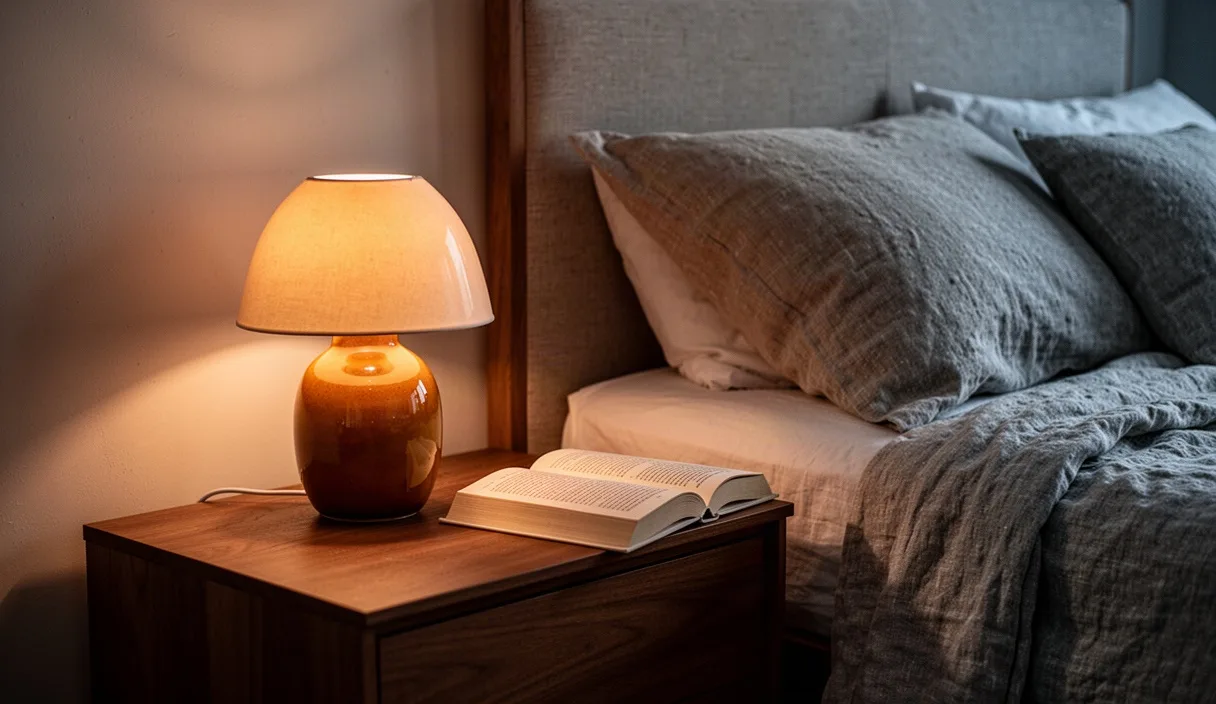
Next, install a dense window solution or secure a comfortable, contoured eye mask that provides total occlusion without pressing directly against your eyelids. Evaluate the perimeter of your bedroom door, adding a draft sweep if light from adjoining rooms spills onto your floorboards. Within the room itself, switch bedside lamps to low-wattage, warm-spectrum incandescent bulbs or warm LEDs rated at 2200K or lower, keeping their location below eye level.
Once the sleeping envelope is biologically dark, commit to the outdoor morning sunlight protocol for fourteen consecutive days. Step outside shortly after waking to set your circadian zero point. If persistent sleep onset delays, morning grogginess, or midday exhaustion continue despite these environmental adjustments, consult a certified sleep specialist or your primary care provider to evaluate for intrinsic sleep disorders such as sleep apnea or delayed sleep phase syndrome.